BhiCoupons.com

  • Home
  • Reviews
  • Blog
You are here: Home / Archives for Blog

How To Start A WordPress Blog On Bluehost

By Sudhir Bhushan Leave a Comment

How To Start A WordPress Blog On Bluehost If you want to start a WordPress blog with little investment and reap maximum benefits, choosing Bluehost for your hosting needs will be highly beneficial. It is tried and tested by several bloggers worldwide and is strongly recommended.

Bluehost has a track record of being one of the top web hosting companies for WordPress hosting. Learn more about Web hosting and WordPress hosting. Moreover, Bluehost is recommended by WordPress itself, which is a testament to its reliability and popularity.

If you want to turn your penchant for blogs into money-making, you must get a self-hosted WordPress blog and pay for the hosting through services like Bluehost. It is not only unbelievably affordable but also provides you with a free domain. You can also run your ads, add affiliate links and directly advertise through the blog.

Before we get into how to start a WordPress blog on Bluehost, let’s take a look at the things required to start a blog.

  • What are the steps to create a WordPress blog on Bluehost?
  • A. Word Press Blogging: Things You Require to Start a Blog
  • B. Importance of choosing the right hosting platform
  • C. 4 Steps to Start a WordPress Blog on Bluehost
  • Conclusion

What are the steps to create a WordPress blog on Bluehost?

To start a WordPress blog you need three things. Good quality web hosting, a catchy domain name and a website building platform (WordPress). With Bluehost, you can buy hosting and domain for your WordPress blog. You can either choose Shared hosting or pick specialised WordPress hosting for added benefits. All Bluehost hosting plans offer a FREE domain for 1 year and SSL protection for all blogs/websites. Once you purchase hosting and domain, all you need to do is download & install WordPress and get started with creating the blog you want.

Verified 2 Hour(s) Ago
6157 Users Have Claimed This Offer!
Editor's Choice
62% OFF WEB HOSTING PLAN - LIMITED TIME OFFER!
CLICK HERE
Click to Get the Deal
Ending Soon. Hurry!
  • Just click to visit, the offer Applies Automatically.
  • Top Web Hosting Plan for Your Site
  • Free Domain + Free SSL + 62% Off Web Hosting.
  • Upto 75% Off on Shared & WordPress Hosting
read more read less
Top

A. Word Press Blogging: Things You Require to Start a Blog

To get your blog online, all you need is:

1. A hosting plan: This is the web server where all your blog files and data are stored. A blog hosting provider is alandlord for your blog. It gives your blog a virtual space to live on. A blog hosting provider will also allow you to get a domain name for your blog.

To buy web hosting, use these Bluehost hosting coupons.

2. A domain name: Domain name is what people type into their browser to find and visit a website/ The domain name (example.com), in simple terms, is the web address for your blog website. Ensure to choose a short and relevant domain name.

Purchase a domain at a discount with these Bluehost domain coupons.

3. A blogging platform: In this case, WordPress. A blogging platform is what you will utilize to build and manage your blog.

Top

B. Importance of choosing the right hosting platform

It is super easy to create a WordPress blog with Bluehost, something you’ll learn through this blog. Choosing the right hosting platform is essential for your brand to offer quality service to the public. A hosting platform can be used for various applications such as virtual stores, websites, and blogs.

Bluehost is the perfect hosting platform for WordPress because of the numerous advantages it comes with:

  • It offers technical support.
  • It provides you with a domain free of cost
  • It will help improve the performance of your website and offer greater security.
  • Being self-hosted on Bluehost will make you look more professional to other parties,whether it is your readers, companies, clients, or audience.

Read this Bluehost review to know why Bluehost is the best hosting for WordPress blogs.

Top

C. 4 Steps to Start a WordPress Blog on Bluehost

1. Register Domain Name

Your domain name is supposed to be one of the most important decisions you’ll make when starting your WordPress blog.

  • Give it a good thought and come up with something easy to recall and memorable.
  • Don’t go for something that’s too confusing or long.

With Bluehost, you enjoy a free domain for the first year if you buy web hosting for 12 months. That’s why it is highly recommended that you sign up for at least 12 months to save a great chunk of money and reap more benefits for the cost!

  • Buying 12 months of hosting ensures that you get cost-effective monthly rates which means the free domain you avail yourself is an added bonus.
  • Purchasing a 36-monthplan gets you an even better value in the long run.

To get a free domain, the next step is to buy hosting from Bluehost. The basic hosting package should be enough to begin with.

Read: Web Hosting vs Domain Name – The Difference

2. Buy Hosting for the Blog

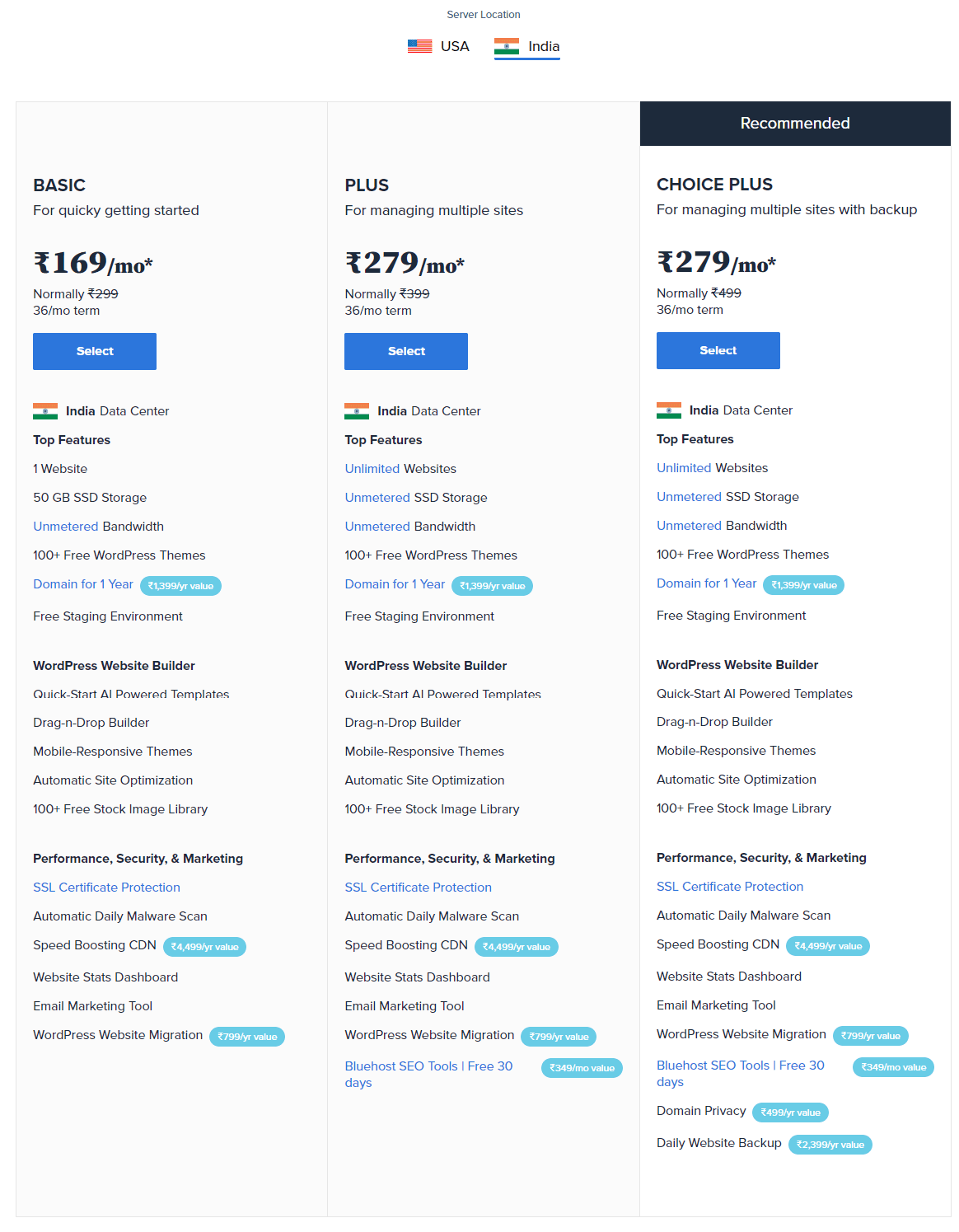
Choosing the “basic” hosting plan is one of the easiest ways to start a blog.
Buy Hosting for the Blog

You can get a 12-monthly plan by paying ₹279/per month. Moreover, if you go for a 12-month plan, your yearly cost would be just ₹3348 a year, unbelievable right? In addition, you get a domain name free and save more money if you go for the 24 months or 36 months plan.

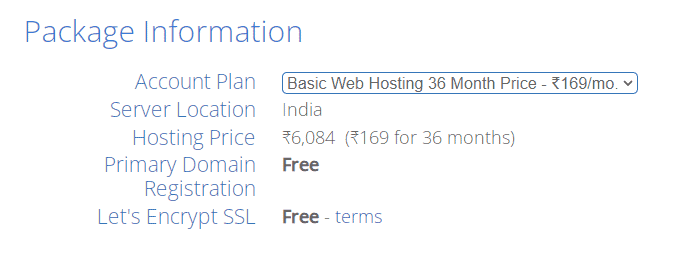
Package Information

The basic plan is enough for the starting out stage. Moving ahead, if you feel like you might need advanced plans, you can easily upgrade the same by paying an additional price.

On the other hand, it is effective and cost-saving to pay for more years all at once, as you get a year of blog hosting at around ₹279, and for 3 years, the price is ₹169, a great deal given all the benefits it comes with. If you want to get value for money, the 36 months plan is your best bet.
Package Information

Follow these steps to purchase hosting for the blog:

  • Click on the “Get started now” button on Bluehost
  • Click on the plan that you want
  • Enter your existing domain name or sign up for a new one
  • Enter personal details and payment information

To learn more, check out this blog on How to Purchase a Domain Name and Hosting With Bluehost

3. Connection Domain and Hosting

If you have purchased your domain name directly via Bluehost, you can skip this step and move to step number 4 directly. However, if you have brought your domain from other providers, you have to connect your domain to your hosting account.

4. Install WordPress on Bluehost

This is the finale! Once you are done creating your password, Bluehost provides an easy guide on how to start your WordPress blog.

  • Firstly, you’ll be requested to choose a theme for your blog,so select the one that fits your blogging requirements.

You can also change the theme later so take your time and explore the beautiful theme options on WordPress. Most of the themes are easy to use and easily customizable.

  • Now click on “Start building”
  • Click “Business” or “Personal” on the next screen and then click “I don’t need help”

Congrats! Your WordPress blog is ready!

Read: How To Install WordPress on Bluehost

Top

Conclusion

Creating a WordPress blog on Bluehost is one of the best decisions that you would make for your brand. These steps could prove to be a great way to ensure that your brand gets the right visibility.

10 Best Popup Plugins For WordPress in 2023

By Sudhir Bhushan Leave a Comment

Best Popup Plugins For WordPress WordPress is an open-source content management system that has become popular amongst individuals who want to build a website or a blog. WordPress does not cost anything; anyone can install, use and modify it. Plus, it doesn’t require any coding knowledge.
Initially, WordPress was used to create blogs, and fast-forward today, the software allows you to create any type of website you want. You can build lifestyle blogs, professional portfolios, business websites, mobile applications or membership sites. WordPress is one of the most loved platforms for many bloggers and businesses. Moreover, 40% of all websites use WordPress for their business.

  • Which are the best Popup Plugins For WordPress?
  • A. Why do you need Popup Plugins?
  • B. Best WordPress Popup Plugins
  • Conclusion

Which are the best Popup Plugins For WordPress?

The list of popup plugins is quite vast. If you want to create customised popup forms, choose Elementor WordPress Popup Plugin, which is a premium plugin. Hubspot WordPress plugin, Popup Maker, Bloom WordPress Popup Plugin, and Icegram Popup Plugin are free options that can be upgraded if required. Ninja forms are excellent to create different variations of popup forms and come with A/B testing.

Verified 2 Hour(s) Ago
6157 Users Have Claimed This Offer!
Editor's Choice
62% OFF WEB HOSTING PLAN - LIMITED TIME OFFER!
CLICK HERE
Click to Get the Deal
Ending Soon. Hurry!
  • Just click to visit, the offer Applies Automatically.
  • Top Web Hosting Plan for Your Site
  • Free Domain + Free SSL + 62% Off Web Hosting.
  • Upto 75% Off on Shared & WordPress Hosting
read more read less
Top

A. Why do you need Popup Plugins?

Popup messages can help you convert website visitors into email newsletter subscribers, members as well as paying customers. However, to create a popup on your WordPress site, you need to install and activate a Popup plugin.

With a WP popup plugin, you can design custom messages that align with your website’s branding. You can also trigger these popups to target website visitors after they have spent a certain amount of time on your website (rather than immediately on landing).

If you are looking for the best WordPress popup plugin, you’ve come to the right blog! In this blog, we have covered simple free popup plugins for WordPress as well as premium/paid popup plugins. So, let’s quickly check out this list of the best popup plugins for WordPress.

To buy premium web hosting for your website, don’t forget to use these Bluehost coupons.

Top

B. Best WordPress Popup Plugins

1. HubSpot WordPress Plugin

HubSpot WordPress Plugin

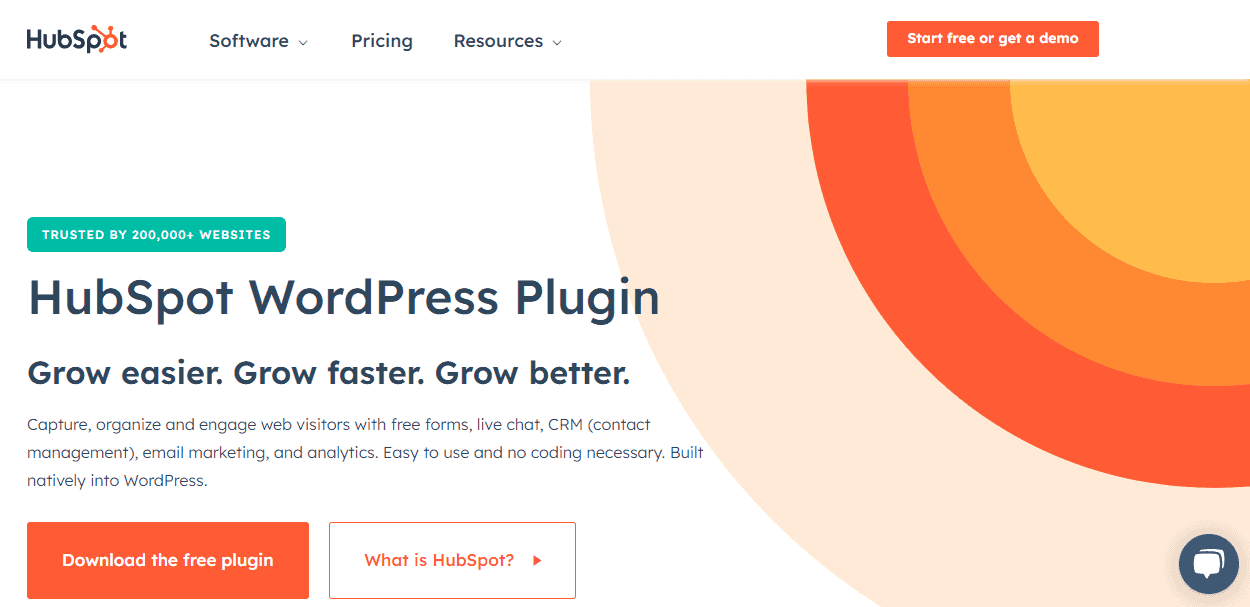
HubSpot offers a free WordPress popup plugin that offers several marketing tools, including CRM, live chat, and a user-friendly popup builder.

  • With HubSpot, you can choose from a range ofpopup types, including slide-ins, drop-down banners, and simple popup boxes.
  • You can target your popups according to page URLs, exit intent, time or scroll-basedtriggers, and visitor behaviours.
  • You can also display thank you messages and send follow-up emails when users enter information into the popups.

It is one of the best free WordPress popup plugins. There are paid plans as well that offer advanced marketing and sales features.

2. Popup Maker

Popup Maker

If you’re looking for customisation options, Popup Maker might be the best WordPress popup plugin, as you can use the built-in editor to customise your popup’s position, size, and animations.

  • One of its strong points isaccessing WordPress-specific targeting rules for
  • You can customise it to fit your marketing needs.
  • It also supports a variety of popup triggers like auto open and scrolling.

You can use the Popup Maker plugin for free, but you won’t be able to create exit-intent popups or use advanced targeting settings. To use these features, you need to upgrade to a premium plan that starts from $87 per year.

3. Elementor WordPress Popup Plugin

Elementor WordPress Popup Plugin

Elementor’s premium version comes with a popup builder that lets you visually customise each part of your popup using their code-free drag and drop editor.

  • It includes multiple popup templates to help you craft custom messages speedily.
  • You can use triggers and display conditions to target users based on actions like clicking or set periods of inactivity.
  • Elementor also integrates with 12 different email marketing tools, including Mailchimp.

The pricing of the Elementor Pro plugin begins at $49 per year.

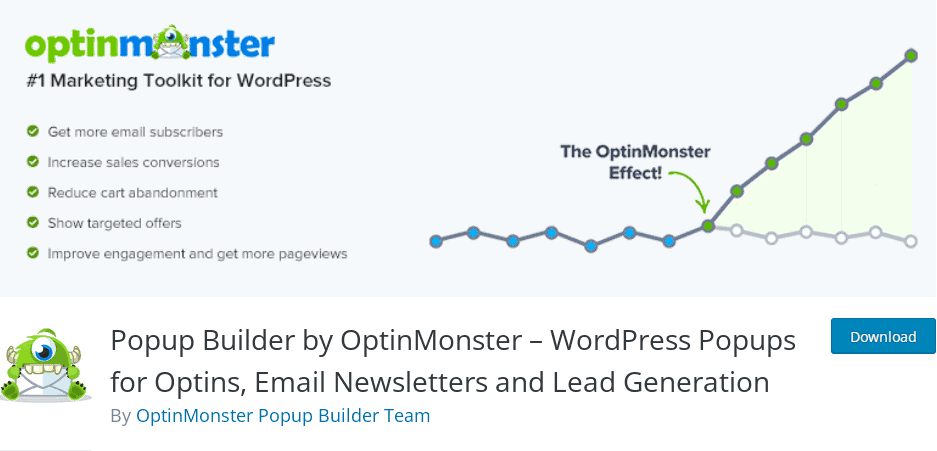
4. Popup Builder by OptinMonster

Popup Builder by OptinMonster

OptinMonster’s Popup Builder is one of the top WordPress popup plugins available that lets you build various popups, including floating bars and slide-ins.

  • You can design custom popups with its drag and drop
  • You can also include animations, sound effects, and customisation for popup displays based on past behaviours and actions on your site.

OptinMonster’s plugin plan starts at $9 per month. However, you will need a higher-tier plan if you want access to advanced functions.

5. Sumo

Sumo

Sumo is one of the best options if you are looking for an affordable popup plugin. You can start using it for free and upgrade as required.

  • It is a wholesome marketing solution comprising email marketing tools, popups, and eCommerce integrations.
  • Sumo integrates with several email marketing solutions, and if you’re using the free plugin, you can connect with AWeber, Mailchimp, and many more.

While the core plugin is free, you won’t be able to use advanced targeting methods. You also won’t have access to advanced email integrations like Salesforce, Keep, or HubSpot.

Sumo Pro costs approx. $39 a month.

6. Bloom WordPress Popup Plugin

Bloom WordPress Popup Plugin

Bloom WordPress Popup Plugin lets you show the popup after someone leaves a comment and allows you to show a popup after the checkout process finishes.

  • With Bloom, you get detailed content targeting rules. You can target post types, posts, and categories of posts.
  • It also includes an option to disable popups for mobile devices.

Bloom can be purchased by itself or as a part of the Elegant Themes membership. It costs $89 annually and $249 for lifetime access and updates.

7. Icegram Popup Plugin For WordPress

Icegram Popup Plugin For WordPress

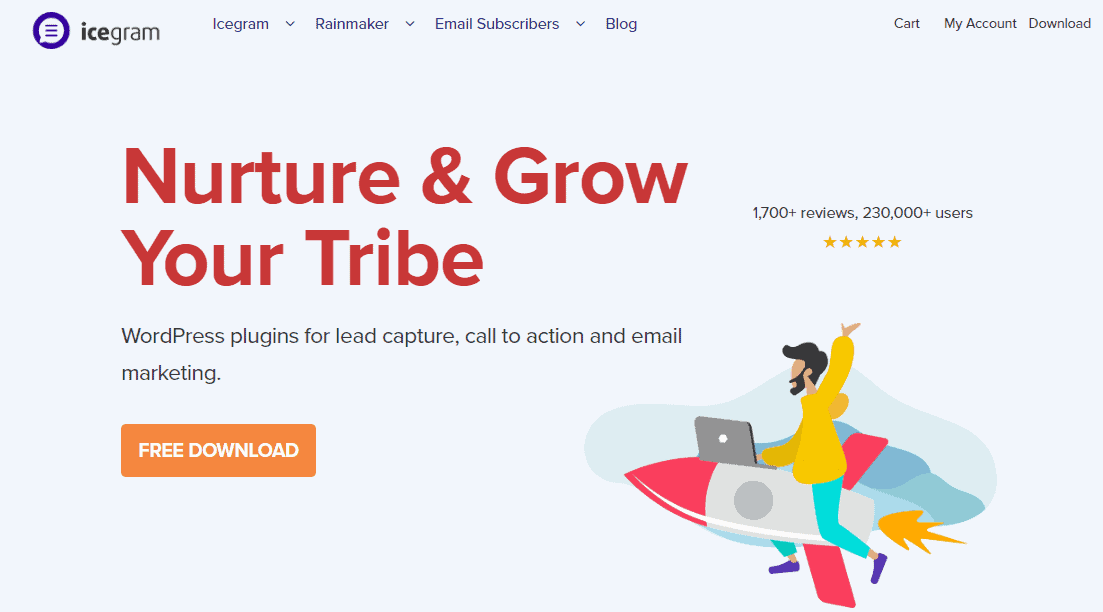
Icegram is one of the most popular WordPress popup plugins for lead generation.

  • It includes over 50 popup templates,including multi-step CTAs, opt-in forms, lightbox subscription boxes, and timed popups.
  • You can choose from various displays and targeting rules,including devices, time intervals, and specific web pages.
  • Additionally, Icegram popups are designed to be mobile responsive.

Icegram can be used for free without advanced settings. Icegram Engage starts from $97 per year.

8. Convert Pro

Convert Pro

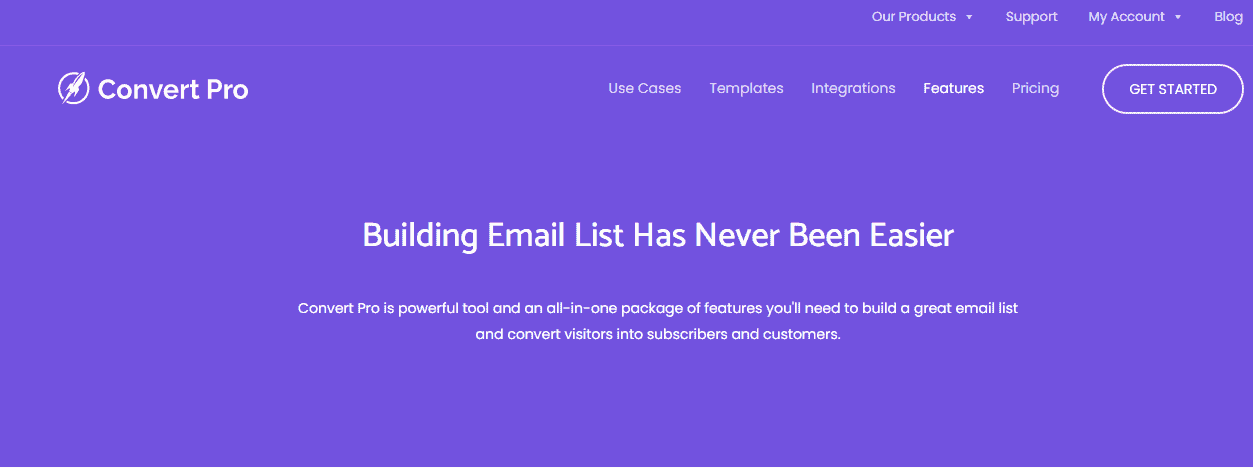
Convert Pro gives you the benefit of a visual drag and drop builder alongside detailed trigger and targeting rules that rival SaaS tools like OptinMonster. Convert Pro is one of the most flexible WordPress plugins, when it comes to trigger and targeting rules.

It costs $89 for use on unlimited sites with one year of support and updates. While it costs $389 for lifetime updates & support and can be used on unlimited sites.

9. Brave Popup Builder Plugin

Brave Popup Builder Plugin

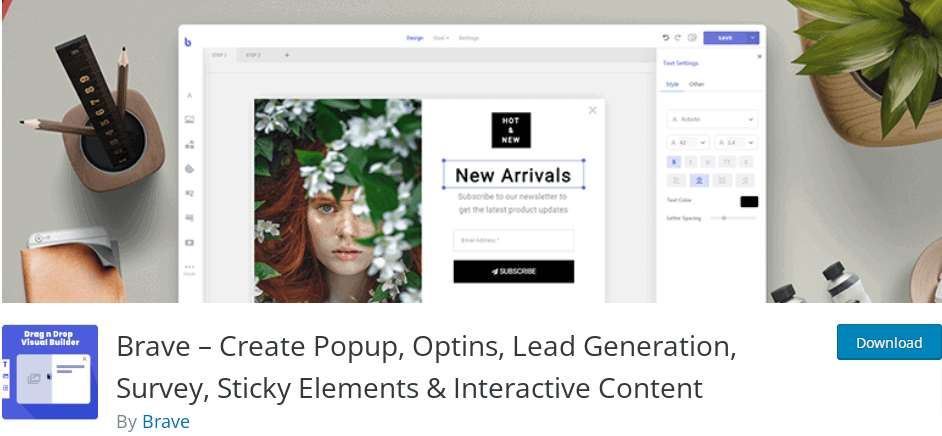
Brave is an all-in-one visitor conversion engine. It includes popups and other tools like quizzes, surveys, social share buttons, and more. Brave has a free version at WordPress.org. After that, the paid plans start at $59/per year for all features and use on a single site.

10. Popup add-on for Ninja Forms

Popup add-on for Ninja Forms

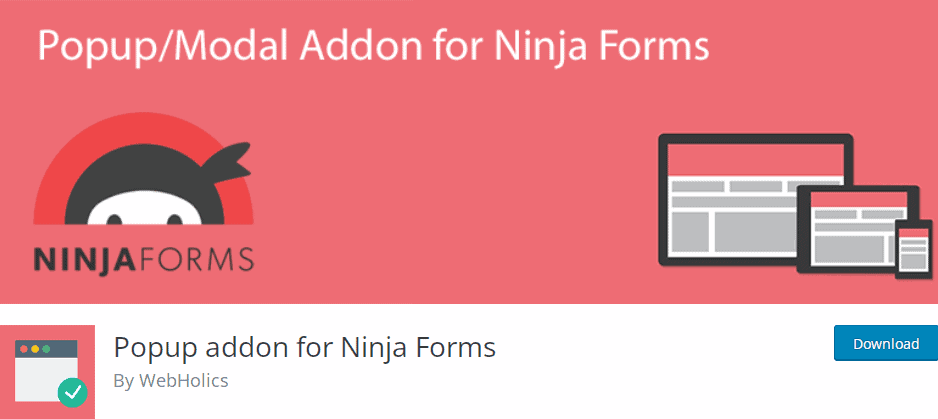
Ninja Popups are an excellent choice if you want to create custom forms.

  • It comes with a drag-and-drop popup builder that allows you to control your message’s alignment, animations, and design.
  • You can choose from over 65 templates and trigger your popups according to specific parameters like inactivity, page-level targeting, and time-based delays.
  • It also has in-built A/B testing to help you run trials of different popup variations.

A regular Ninja Popup license costs $24, including six months of support.

Top

Conclusion

WordPress popup plugins can help you connect with your website visitors and turn them into subscribers. You can use these messages to increase signups to the email newsletter list, dissuade users from leaving your website and promote offers as well. This list of the best WordPress popup plugins will help you choose the best one according to your website strategy and conversion needs in the long run.

Require a domain and hosting for your new website? Save big with these Bluehost domain coupons and Bluehost hosting coupons.

Website Security Audit Guide: 4 Ways To Protect Your Website

By Sudhir Bhushan Leave a Comment

Website Security Audit Guide One of the first things you need to do is secure your users accounts and actively monitor user roles and permission. It will help you manage the user access and grant them permission required for their designated roles.
Since WordPress powers over 39.5% of websites on the internet, we’ll talk about the user roles available in WordPress.

  • First are the Administrators. They have complete control over everything. They are the ones who can create users and assign them roles.
  • Next, we have editors who are typically responsible for managing the website content and have publish, edit, and delete access.
  • Then we have the Author role, which has fewer permissions than editors. Authors are only able to access their own content and modify it.
  • Then we have the contributors, who can read the published content and delete or edit their own posts.
  • The lowest on the roles ladder is the Subscriber, who have only the privilege of reading and managing their own profiles.
  • In most cases, Admin is the top-level role. But in multisite installation, Super Admin is responsible for the entire network. A super admin has the permission to add or delete sites and make other high-level changes.

Now, let’s explore the other measures you have to take to protect your website against attacks and other vulnerabilities.

Verified 2 Hour(s) Ago
6157 Users Have Claimed This Offer!
Editor's Choice
62% OFF WEB HOSTING PLAN - LIMITED TIME OFFER!
CLICK HERE
Click to Get the Deal
Ending Soon. Hurry!
  • Just click to visit, the offer Applies Automatically.
  • Top Web Hosting Plan for Your Site
  • Free Domain + Free SSL + 62% Off Web Hosting.
  • Upto 75% Off on Shared & WordPress Hosting
read more read less
Top

  • 1.Tools to scan your Website Security Audit :
  • 2. Update your Site Settings and Components:
  • 3. Check your Email Domain Reputation with tools:
  • 4. Renew your website’s SSL Certificates

1.Tools to scan your Website Security Audit :

Running a website security scan will help you find if your website is free of malware and other vulnerabilities. It will also help you find if your website is running obsolete software and needs updates. Additionally, some tools can also identify if your website has been blacklisted for some reason. You can find out why it has been blacklisted, fix the issues, increase your website security and then recover it by getting it whitelisted again.

We are going to share some free tools that will help you run a website scan and detect any vulnerabilities:

i) Sucuri Scanner:

Sucuri Scanner

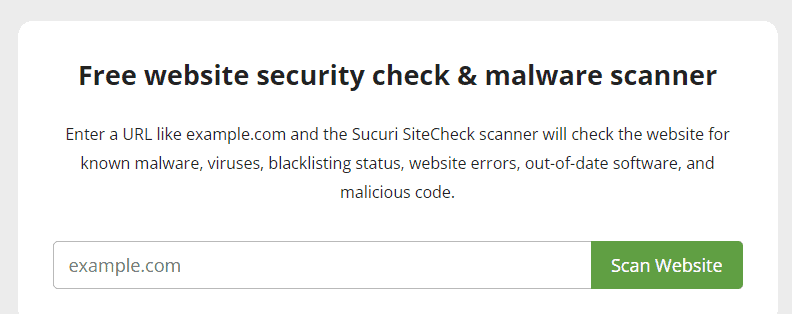
Succuri helps you check your website for malware, viruses, website errors, malicious codes, out-of-date softwares, and blacklisting status. You can check your website status by entering your website URL and hitting the scan website button.

ii) HostedScan Security:

HostedScan Security

Hosted Scan Security scanners allow users to scan not just websites but also servers and networks. You can run a free scan to check the security status of your website. The results will show the risk and the threat level. The risks with higher threat levels should be fixed on priority.

iii) UpGuard Website Security Scan:

UpGuard Website Security Scan

With Upguard, you can run a free website security scan and get an assignment and a free security score for your website. It helps detect vulnerabilities such as server information header exposed and checks the status of your SSL certificate. It also tells you more details about SSL certificates, including days left to renew.

iv) Mozilla Observatory:

Mozilla Observatory

Mozilla Observatory is a free resource that tests your websites for factors such as content security policy, cookies, cross-origin resources sharing, redirection, and referrer policy. It assigns a score to each test, showing how well your website fares on each scale. It also offers a detailed report helping you understand the vulnerabilities and giving you suggestions on how to fix them.

Top

2. Update your Site Settings and Components:

Businesses and professionals using Content Management systems such as WordPress can check their site settings and update any if required.

WordPress users can review and update their site settings by carrying out the following actions:

  • Website visitors shouldn’t have access to your backend data. Hide the information. When you leave such information unhidden, hackers use these details to attack your websites.
  • Spam comments may also leave your website vulnerable to attacks. So, use your moderation privileges to filter Spam comments and delete them.
  • Add validation to all the input fields on your website. These are the fields that take information from visitors. You can prohibit the use of unwanted characters.

Regardless of which CMS you use, you have to implement these tactics to ensure that your website is secure.

Also, remember to perform regular updates of website components such as themes, plugins, and other add-ons that are essential to the working of your website. It reduces the risk of cyber-attacks, ensuring your website remains secure from hackers.

So, don’t overlook a notification mentioning a new update for website elements. These days software makers tend to add new features and continuously fix bugs to make it better and provide the users with a better experience. When you ignore these updates, you not only leave your website vulnerable to attacks but also miss on new features.

Top

3. Check your Email Domain Reputation with tools:

Activities such as sending spam emails, hosting phishing websites, and distributing malware can get your website blacklisted. If you have partaken in such activities, you should stop and start exploring whitehat techniques to grow your business. Running a website audit should help you narrow down the issue and find why your website was blacklisted. You could also use Email Domain Reputation checker tools that can help you detect these issues.

We are going to share some of the best Email Domain Reputation checker tools to ensure that you get the help you need:

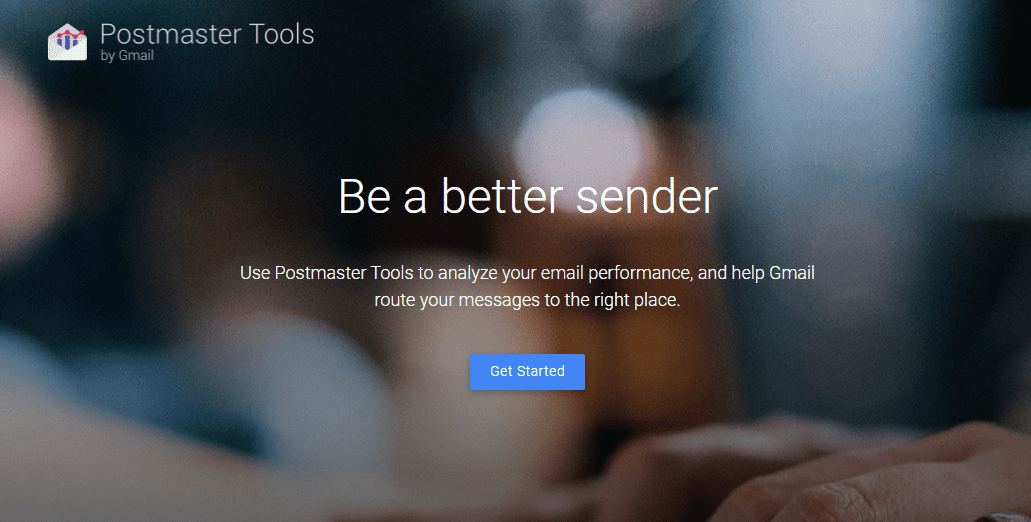
i) Google Postmaster Tools:

Google Postmaster Tools

Google Postmaster Tools helps you get a better understanding of your website. It gives you access to Gmail data and diagnostics, which can help you learn about Gmail delivery errors, feedback loops, and spam reports. It gives you an understanding of how Google sees your website or domain. This tool is available to websites that have high sending volumes. For it to work, you have to add a custom record to your DNS.

ii) Mail Tester:

Mail Tester

Mail-tester is an Email Domain reputation checker that will examine your mail server, sender IP address, and content. It will provide a detailed report telling you what needs to be configured and what was done right. It helps you determine the quality of your emails, ensuring that they don’t present as spam.

iii) Sender Score:

Sender Score

Sender Score assesses the reliability of the sender’s IP Address and evaluates your email quality. It then assigns your domain and IP address a score to signify your reputation. The higher the score, the more reputable your domain is. It will also ensure that your emails aren’t blacklisted but are delivered on time.

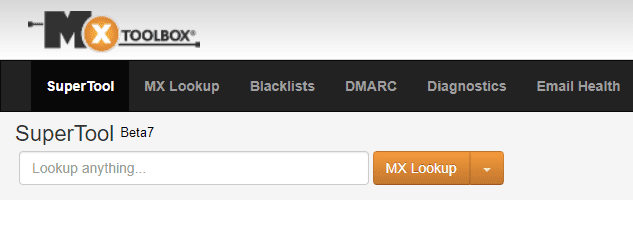
iv) MXToolBox:

MXToolBox

Hackers tend to target vulnerable websites and send spam emails from their domain. MX Toolbox will help identify who is sending the email from your domain with their location and IP Address. It will also help identify any existing issues with your web server, DNS, Mail Server, and your blacklist status, notifying you if anything changes.

Top

4. Renew your website’s SSL Certificates

An up-to-date SSL Certificate has a lot of advantages for your websites, including an improved search ranking. An SSL Certificate uses encryption that ensures that hackers aren’t able to access the data in transit. If you let the SSL certificate lapse, it will remove the padlock from your URL. The change will instantly notice the visitor, who’ll suspect something is wrong. You might even lose a few visitors.

To buy an SSL Certificate for your website, use these Bluehost coupons

A website with an SSL certificate gets the HTTPS prefix in the URL. They also get the secure tag with a padlock that usually signifies that the website is secure to visit. Google has changed its algorithm to ensure that HTTPS enabled websites rank better to improve their security.

If your business website has an e-commerce store that needs to make a payment or any other services that need to accept payment, it needs to have an SSL Certificate. It is one of the primary requirements of PCI/DSS.

If you let the SSL certificate lapse, it will remove the padlock from your URL. The change will be instantly noticeable to the visitor, who’ll suspect something is wrong. You might even lose a few visitors.

Top

Final Word

Apart from these four website security audit measures, you can also improve your website security by monitoring the incoming traffic. A sudden spike in traffic, with no identifiable reason, could mean your website is under botnet attack. It is why you need to filter irrelevant traffic from untrusted sites. You can protect your website from malicious traffic with the help of DDoS protection offered by reputable services such as Cloudflare.

To maintain the security of your website, you need to purchase hosting from a reliable provider such as Bluehost. To know more, check out Bluehost reviews.

Refer to our Guide: Website Security: Secure Your Website Against Malware & Spam for more tips on running website checks and more ways to secure your website.

3 Effective Ways to Optimize Images for Your WordPress Website

By Sudhir Bhushan Leave a Comment

Effective Ways to Optimize Images High-resolution images have their benefits, unnecessarily uploading large files can adversely affect the speed of your WordPress websites. Images are one of the few multimedia components that make your website attractive. So, you have to optimize most of these components to ensure that your website speed doesn’t suffer.
Website is simply one of the concerns with unoptimized images. When you optimize your WordPress images, it, in turn, improves the user experience. Visitors are put off by websites that take too long to load and leave quickly. When your speed increases, your bounce rate improves as well. It will also help you save money on your WordPress upgrades. Optimizing images ensures that you won’t need to purchase additional storage unnecessarily. With optimized images, your website can rank better on google. Websites that load quicker get a preference over the slower loading websites.

So, let’s explore the three ways in which you can optimize images for WordPress websites.

Verified 2 Hour(s) Ago
6157 Users Have Claimed This Offer!
Editor's Choice
62% OFF WEB HOSTING PLAN - LIMITED TIME OFFER!
CLICK HERE
Click to Get the Deal
Ending Soon. Hurry!
  • Just click to visit, the offer Applies Automatically.
  • Top Web Hosting Plan for Your Site
  • Free Domain + Free SSL + 62% Off Web Hosting.
  • Upto 75% Off on Shared & WordPress Hosting
read more read less
Top

1. Compress Your WordPress Images with Plugins and other Softwares:

Optimize Images

One of the quickest ways to optimize images on WordPress is to compress them. Compressing images includes minimizing the file size while maintaining the quality of the image. In order to maintain the quality of the image, you have to perform lossless compression. With lossless compression, your images will not lose any data. Lossless compression packs data into smaller file sizes, usually half of the original file, making it easier to store data or transmit it. You can decompress the compressed file and recover the original image file without any data or quality loss.

Lossy compression, on the other hand, results in data loss. The compressed file cannot be restored to its original form after compressing it via the lossy method. It also affects the quality of the image.

The compressed images load quicker and thereby improve the website’s speed. You can use Image compression plugins to optimize your images with this technique.

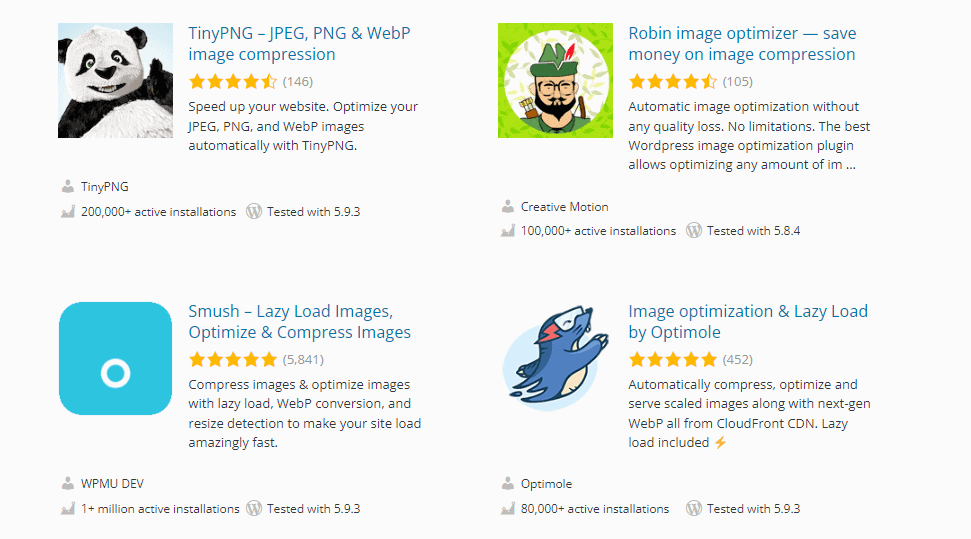
Listed below are two of the best image compressor plugin for WordPress:

i) Tiny PNG:

Tiny PNG

One of the most commonly used WordPress compression Plugins, Tiny PNG, comes highly recommended. Upon installation, it will optimize individual images in your media library. Users can also manually do bulk image optimization of the existing image in your WordPress media library. It also automatically optimizes every new image you upload to your WordPress site. TinyPNG supports the following image formats: JPG, WEbP, and PNG.

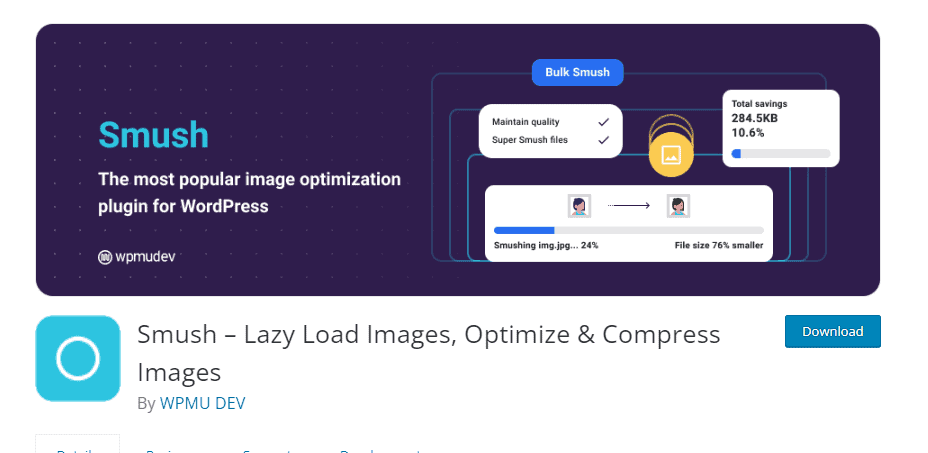
ii) SMUSH:

SMUSH

Another highly recommended Image Optimizer, the Smush WordPress plugin, helps you compress and resize the images on your WordPress website. It does Lossless compression on an individual as well as bulk images. It is also an effective Image resizing tool, which we’ll shortly discuss. It can compress GIF, PNG, and JPEG files. The pro version has additional features that you should check out.

You can also try other Image Compression plugins such as Robin Image Optimizer, Image Optimization by Optimole, and WP Optimize.

Top

2. Resize Your WordPress Images:

Image optimizer tools usually cover resizing as well. But you have to actively set it up for resizing as well. For this, you have to first install one of the free plugins. We’ll talk you through the installation process for Smush.

  • You have to be logged in to your WordPress account to install Smush.
  • Once you have logged in, you can navigate to the Plugins section on your dashboard.
  • After clicking on plugins, you can select the add new plugins option.
  • Use the search bar to search for: Smush Image Compression. The results will include the Smush plugin. Click on the install now button.
  • Once it is installed, you can activate the plugin.
  • After the plugin is activated, you can access its features, such as Bulk Smush and Resize. While the Bulk Smush section is easily viewable, you need to go to the Tools section to find the Resize option.
  • In tools, you’ll find the Image Resizing option. Enable it to automatically resize all your large images to a specific width and height set by the plugin. You can also set a personal image size with the link provided.

You can also resize images with other WordPress plugins, including TinyPNG.

WordPress also offers you the option to set image pixel dimensions. This way, you can resize images with a click of a button. For this to work, you have to set your preferences for the different image sizes: Thumbnail, Medium, and Large.

You can set it up through your WordPress dashboard. Go to the Settings. Then Select Media. Here you can make the necessary changes and save the setting.

Top

3. Remove Unnecessary and Unused Images from the WordPress Media Library:

Image Cleaner

When you first start a website, you don’t realize the amount of media you’ll end up uploading to the website. The media, especially the images you upload, are stored in the WordPress media library. Not only do these images take up unnecessary space, but they also slow down your Website.

Websites that deal with products and services have to usually create new landing pages or advertisements supported by complementary images. These are usually high-quality images that take up a lot of space. Once the advertisement or landing page has run its course, it is usually deleted or replaced with another. It means an additional burden to your already stretched media library. It also means upgrading your WordPress package for more storage space, which might be an unnecessary expense.

Instead, you should spend a little time cleaning up the obsolete images, making space for newer content. Before you delete anything, get a local backup, so if you end up deleting an important image, you have the chance to recover it.

Go to your WordPress Media Library. You can navigate to it by selecting the Media option from the Dashboard and then clicking on Library. You can go through the images and delete the ones that are no longer necessary for the functioning of your website. You can also bulk select and delete.

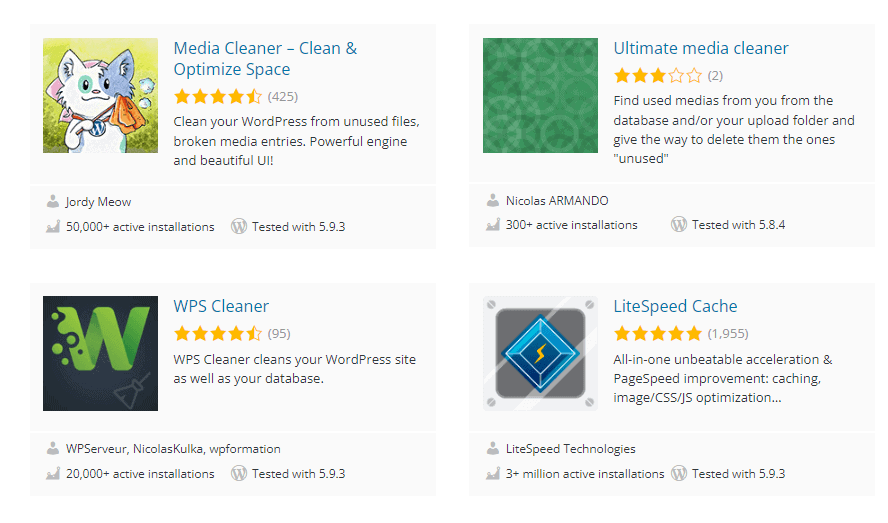
You can also use Media cleaner plugins to help you clean your media library.

i) Media Cleaner

Media-Cleaner

With the help of this Media Cleaner plugin, you can easily delete unused media and broken entries from your media library. The media cleaner is powered by a Database cleaner that ensures that the website will continue to work properly after the images are deleted. The plugin will also remind you to back up your data before making permanent changes to your website.

ii) DNUI (Delete Not Used Image):

Media-Cleaner

DNUI isn’t as widely used as Media cleaner but is a good alternative to media cleaner. It detects the images that aren’t used and are simply taking up space in your media library. You can then delete those images and make space for new uploads.

Top

Final Word

Optimizing your websites with these three methods should do the trick and have your website running smoothly in no time. However, there are more techniques that can help you speed up your WordPress site. The #1 is buying reliable web hosting. To purchase web hosting from Bluehost, check out these Bluehost Coupon Codes to get a discount.

Consider the WordPress websites that use a content delivery network. These websites can use the CDN to distribute copies of images to edge servers across the world. Then the edge server will deliver these images to the nearest visitors. Suppose a WordPress website running a CDN is being hosted on a US server.

This WordPress site has used CDN to distribute copies of its website content across the world. So, visitors from Asian or African countries will have a seamless experience. When they load the website, they will receive the copies from the edge server.

For more tips on speeding up your WordPress website, you can also refer to our guide: 7 Tips to Speed Up Your WordPress Website in 2023

WordPress Statistics – Everything You Need To Know

By Sudhir Bhushan Leave a Comment

WordPress Statistics The journey of WordPress, with its initial release in May 2003, to date, has been nothing short of incredible. WordPress powers millions of websites around the globe and is the #1 CMS platform chosen by developers to build a website.

From countless WordPress themes to abundant WordPress plugins, this open-source CMS provides all the features needed to build and grow a successful website.

Being a top content management system, WordPress offers robust security through consistent updates for WordPress core, themes and plugins. The best part, it offers SEO and social media integration, which helps businesses increase brand visibility and reach.

If you are curious about the growth of WordPress since its inception, then the below WordPress stats infographic highlights everything – right from WordPress usage statistics to plugins, themes and security statistics to WordPress version and community statistics. Check it out!

Verified 2 Hour(s) Ago
6157 Users Have Claimed This Offer!
Editor's Choice
62% OFF WEB HOSTING PLAN - LIMITED TIME OFFER!
CLICK HERE
Click to Get the Deal
Ending Soon. Hurry!
  • Just click to visit, the offer Applies Automatically.
  • Top Web Hosting Plan for Your Site
  • Free Domain + Free SSL + 62% Off Web Hosting.
  • Upto 75% Off on Shared & WordPress Hosting
read more read less
Top
  • WordPress Statistics: Everything You Need To Know
  • 1. WordPress Timeline: The History of WordPress
  • 2. WordPress.com vs WordPress.org: What’s the Difference?
  • 3. Growth of WordPress – Versions and Milestones
  • 4. WordPress Usage Statistics
  • 5. WordPress Plugins Statistics
  • 6. WordPress Themes Statistics
  • 7. Automattic WordPress Stats
  • 8. WordPress Security Statistics
  • 9. WordPress Community Statistics
  • 10. WordPress Jobs
  • 11. WordPress Competitors
  • FAQs – Frequently Asked Questions

WordPress Statistics: Everything You Need To Know

1. WordPress Timeline: The History of WordPress

  • 2001: French programmer Michel Valdrighi launched the blogging tool B2/Cafelog. Many consider this WordPress 0.5.
  • 2002: Michel Valdrighi – the original creator of B2/Cafelog – abandons the platform.
  • 2003: Two users of B2/Cafelog – Matt Mullenweg and Mike Little – started a new platform and named it WordPress to replace the existing blogging software (B2/Cafelog). The first version – WordPress 0.7 – was released on May 27th, 2003.
  • 2004: In January, WordPress 1.0 was released. Also known as the ‘Davis’ version, which included ‘plugins.’
  • 2005: In August, Matt founded the Automattic company and raised $1.1 million in funding in October.
  • 2006: Automattic filed the trademark registration for WordPress and WordPress logo. In August of the same year, the first WordCamp was held in San Francisco.
  • 2007: Beijing hosted the first International WordCamp outside of San Francisco.
  • 2008: WordPress theme directory is launched. Anyone can develop & upload their themes to this directory, and right now, there are 8,298 themes.
  • 2009: WordPress won the Packt – Best Open Source CMS Awards.
  • 2010: Matt transferred the ownership of the WordPress trademark and logo to the WordPress Foundation.
  • 2011: WordPress powered over 12% of the world’s websites, surpassing 50 million WordPress blogs. In February of that year, WordPress launched its official mascot ‘Wapuu’ at WordCamp Fukuoka.
  • 2012: Two new WordPress versions – Green and Elvis – are released to redefine user experience.
  • 2013: WordPress dominated the CMS market with a whopping share of 59%, thereby becoming the most sought-after CMS in the world.
  • 2014: The non-English downloads for WordPress surpassed the English downloads.
  • 2015: Automattic acquired WooCommerce – the most popular WordPress eCommerce plugin.
  • 2016: WordPress turned ‘13’ and Matt Mullenweg predicted: “I see the future of WordPress as an operating system for the open web.”
  • 2018: Gutenberg – the new block-based editor is introduced with the WordPress 5.0 release. Since then, Gutenberg has had over 67.8 million active installations.
  • 2022: WordPress is still going strong with a current market share of 64.2%.
Top

2. WordPress.com vs WordPress.org: What’s the Difference?

How to get started on Freelancer.com or Freelancer.in?

  • There are two software variations of WordPress; WordPress.com and WordPress.org.
  • WordPress.org is an open-source content management system, while WordPress.com uses the WordPress.org core software and can be accessed for free.
  • With WordPress.org, you need to find a third-party hosting company, such as Bluehost. WordPress.com is an all-in-one package wherein installation and hosting are taken care of by WordPress itself.
  • Both platforms have a theme repository, but to customise a site on WordPress.com you need to upgrade your plan from free to premium.
  • WordPress.org allows easy access to all plugins – free and paid. To add plugins on WordPress.com, you need to upgrade to a paid plan.
  • With WordPress.com, you can’t create an online store. WordPress.org allows you to easily create an online store through the WooCommerce plugin.
  • Both WordPress platforms are universally supported by a large community of volunteer developers.
  • With WordPress.com, website security and maintenance are taken care of. With WordPress.org, users are themselves responsible for maintaining, securing, and taking updates and backups.
Top

3. Growth of WordPress – Versions and Milestones

There are 40+ major versions released by WordPress since 2003. Beginning with WordPress 1.0, all major releases are named in honour of Jazz Musicians that the WordPress core developers admire. Out of all the releases, the WordPress 5.2 version is downloaded nearly 37 million times, and the latest WordPress 5.9 version “Baker” came out on January 25, 2022. Below are some of the major releases and their features.

  • 2003: The first version – WordPress 0.7 – was released on May 27th.
  • 2004: In January, the WordPress 1.0 version was released (Davis) that included the ‘plugins.’ In May of that year, the WordPress 1.2 (Mingus) version comes with Ryan Boren’s plugin and featured post preview, automatic thumbnails, encrypted passwords, comment moderation, etc.
  • 2005: In February, the WordPress 1.5 (Strayhorn) version was released, which focussed on user experience, and themes & static pages were introduced. In October, Matt created the Akismet spam protection plugin for WordPress. In December, the WordPress 2.0 (Duke) version was released with the WYSIWYG editor.
  • 2007: In January, the WordPress 2.1 (Ella) version was released with the autosave feature. It allowed users to switch between the WYSIWYG and the text editors. You could also hide your blog from search engines, import/export content, and set any page as the front page.

    In May 2007, WordPress 2.2 (Getz) was released with features such as widgets, Atom feeds, etc. WordPress 2.3 (Dexter) version was released in September and offered canonical URLs, native tagging support, and pending review features, among others.

  • 2008: In March, the WordPress 2.5 version was released, which included a customizable dashboard, full-screen writing, media library, one-click plugin upgrades, built-in galleries, and multi-file uploading.

    In July of that year, the WordPress 2.6 (Tyler) version was released with theme preview, track changes to post/pages, word count, customizable avatars, image caption, and bulk management of plugins. By this time, WordPress was considered a full-fledged CMS and not just a blogging platform.

  • 2009: A major WP update, the WordPress 2.8 (Baker) version was released. It featured the automatic installation of themes and included the CodePress editor for developers.
  • 2010: In June, the WordPress 3.0 (Thelonious) version was released that included custom post types, custom backgrounds, custom taxonomies, header, menus, etc.
  • 2011: In February, the WordPress 3.1 (Reinhardt) version came out that included the admin bar; followed by the release of WordPress 3.2 and 3.3.
  • 2012: WordPress 3.4, 3.5, and 3.6 releases introduced the new media manager, theme customizer, and theme previews.
  • 2013: In October, the WordPress 3.7 (Blaise) version came with the automatic updates feature. Whereas, WordPress 3.8 – which was released in December – introduced MP6: the new WordPress admin interface, which was responsive.
  • 2014: In April, the WordPress 3.9 version was released that featured the WordPress visual post editor. Users could now drag and drop images directly into the post editor. It also offered live widget previews and audio playlists. This was followed by WordPress 4.0 and 4.1 releases.
  • 2015: WordPress versions – 4.2, 4.3, and 4.4 – came with emoji support, theme customizer, improved localization, etc.
  • 2016: WordPress released the 4.5, 4.6, and 4.7 versions that offered the content recovery option via browser storage and custom CSS feature for theme customizer. These versions also actively started supporting HTTPS.
  • 2017: WordPress 4.8 and 4.9 versions were released that included the default widgets to add images/audio/video, rich text, and HTML.
  • 2018: The WordPress 5.0 (Valdés) was released, which introduced Gutenberg – WordPress’s new block editor project.
  • 2019-2020: WordPress released 6 more versions during this period – 5.1, 5.2, and 5.3 5.4, 5.5, and 5.6 versions.
  • 2021: In March, the WordPress 5.7 version was released, followed by the 5.8 version in July.
  • 2022: In January, the latest version of WordPress 5.9 ‘Joséphine Baker’ was released.
Top

4. WordPress Usage Statistics

  • According to the latest statistics, there are at least 30,462,105 live websites online using WordPress.
  • WordPress has a market share of 64.2%, with version 5 being used by 92.5% of all WordPress users.
  • 14.7% of the world’s top websites use WordPress, including The New York Times, BBC America, Facebook Newsroom, and Spotify.
  • With over 1.3 billion total websites across the internet, 455 million websites are powered by WordPress as of 2022.
  • WordPress has 409 million unique visitors that view 20 billion pages each month.
  • 70 million new WordPress posts are created by users each month that generates 77 million new comments.
  • WordPress blogs are written in over 120 languages, with 71% of blogs written in English followed by 4.7% of blogs written in Spanish.
  • On average, the keyword ‘WordPress’ is searched 2,940,000 times every month by users across the world according to the, data published by KWFinder.
  • 196 is the total number of languages in which WordPress is available.
  • WordPress takes care of 80-90% of SEO mechanics, according to Matt Cutts.
  • WordPress installation requires less than 5 minutes. That’s right!
Top

5. WordPress Plugins Statistics

  • WordPress.org currently has over 59,686 plugins in its directory that are free to use.
  • Jetpack is the most popular WordPress plugin, with over 5 million active installations.
  • The WooCommerce plugin powers 28% of the top 1 million eCommerce sites across the world.
  • Yoast SEO, Akismet Spam Protection, Contact Form 7, Classic Editor, Elementor Website Builder and Real Simple SSL plugins have over 5 million active installations..
  • There are over 4,900 premium WordPress plugins on CodeCaynon.
  • 57% of WordPress plugins have never been rated or reviewed.
  • Wordfence Security is the most popular plugin with 4+ million active installations.
  • Only 3% of WordPress plugins are not updated.
  • Approx. 47% of WordPress plugins have a donate button.
  • Bookly PRO – Appointment Booking and Scheduling Software System is the best-selling WordPress plugin for 2022.
  • UpdraftPlus is a notable WordPress backup plugin with over 3 million installations.
  • Slider Revolution is the top-earning WordPress plugin at CodeCanyon with 420.5K sales for $85.
Top

6. WordPress Themes Statistics

  • WordPress repository has over 9,534 free themes.
  • Kubrick was the first default theme for WordPress, released in 2005.
  • A new default theme is released by WordPress every year.
  • Avada is the most popular theme on Themeforest, with 800,868 sales.
  • Apart from Avada, Flatsome and BeTheme are the best-selling WordPress theme for 2022.
  • Astra is the most popular free WordPress theme with 1 million active installations.
  • Almost 33% of the WordPress themes on ThemeForest are priced at $59.
  • At $1,019, Filoxenia-WordPress Hosting Theme + WHMCS is the most expensive WordPress theme.
  • ThemeForest has 51,672 premium WordPress themes with a start price of $2.
  • With a combined market share of 12%, Divi, Avada, and Genesis Framework are the top-three most popular WordPress themes.
  • Since 2008, ThemeForest grossed $286 million from WordPress Themes.
  • Since April 2022, users have switched their WordPress theme around 562,845 times.
  • Skylar is the most expensive theme on ThemeForest at $10,000
Top

7. Automattic WordPress Stats

  • Automattic company was founded by WordPress co-founder Matt Mullenweg in 2005.
  • It is a fully distributed company with over 1,505 employees working from 81 countries, speaking 100 different languages, and no central office.
  • WordPress.com, WooCommerce, Jetpack, VaultPress, Akismet, Gravatar, Tumblr, and more are some of its noteworthy projects.
  • While Automattic runs WordPress.com, it also contributes to WordPress.org, BuddyPress, and bbPress, among others.
  • With the majority of the workforce working remotely, Automattic decided to shut its San Francisco office in 2011.
  • Longreads, founded in 2009, is a part of Automattic. So is Simplenote, which was acquired by Automattic in 2013.
  • In 2018, Automattic acquires the Atavist Publishing Platform intending to incorporate the functionality of Atavist’s CMS platform into WordPress.com and Jetpack, thereby making it available to a much wider audience.
  • In 2019, Automattic announced the launch of Happy Tools – a suite of products for the future of work. The first tool that was launched in this series was the Happy Schedule – a new take on workforce management.
  • As of 2019, Automattic was valued at $3 billion post-funding.
  • In 2020, the company started ‘The Distributed Podcast’ to have in-depth conversations with companies about the future of work. This is hosted by Matt Mullenweg.
Top

8. WordPress Security Statistics

  • In 2020, Wordfence blocked more than 90 billion malicious login attempts from over 57 million unique IP addresses. This was done at a rate of 2,800 attacks per second targeting WordPress.
  • It is estimated that more than 70% of WordPress installations are vulnerable to hacker attacks.
  • According to Sucuris, in 2019, 56% of websites were using an outdated version of the software.
  • 29% of WordPress websites get hacked due to an insecure theme. While 8% of websites are hacked because of a weak password, and 22% of websites are affected due to vulnerable plugins.
  • Among WordPress security vulnerabilities, cross-site scripting issues account for 39% whereas 37% are caused by vulnerable core files.
  • According to Alexa, approx 30.95% of the top 1 million sites are still running on the vulnerable WordPress 3.6 version.
  • As of 2016, only 11.45% of all active WordPress websites use an SSL certificate.
  • iThemes security plugin had a breach that affected approximately 60,000 users.
  • WordPress plugin vulnerability leads to the Panama Papers leak, wherein hackers were able to access over 4.8 million emails.
  • Vulnerability on the hosting platform has caused 41% of WordPress attacks.
Top

9. WordPress Community Statistics

Being an open-source project, WordPress has a vast community of diverse people from different backgrounds and various technical skills. The core leadership team is led by WordPress co-founder Matt Mullenweg, five lead developers, and several other core developers.

  • Launched in 2014, the Five for the Future program encourages organisations to contribute 5% of their resources to WordPress development.
  • Jetpack, WooCommerce, and Bluehost are some of the global community sponsors that support WordPress communities worldwide.
  • Currently, there are 1,289 meet-up groups for WordPress all over the world with 750,491 active members.
  • 63% of WordPress core committers are part of large agencies & corporations and not employed by Automattic.
  • The first WordCamp was organised in San Francisco in 2006.
  • In 2015, WordCamps were held in 34 different countries with events on 6 continents.
  • There are approx. 2,030,000+ topics that you’ll find on the official WordPress support forum.
  • WordPress.tv is an official video resource that is available to the WordPress community for free. It provides video resources on WordPress education, news, and recordings of WordCamp events.
  • WordCamp Europe is an annual flagship event, which is one of the biggest community organised conferences for WordPress enthusiasts.
  • WordPress offers developers access to and use of WordPress.com data through its APIs.
Top

10. WordPress Jobs

  • State of the Word survey in 2014 estimated that 25% of participants make their living from WordPress, and over 90% of people built more than one WordPress website.
  • The average salary for WordPress jobs is $55,912 per year.
  • Automattic has hundreds of open positions across more than 70 countries for designers, engineers, business development & marketing, legal, finance, etc.
  • There are over 9663+ WordPress Developer jobs posted on Upwork.
  • In the United States, the average base salary of a WordPress developer is $32.47 per hour.
  • There are hundreds of small & large businesses, agencies, and developers selling WordPress related products.
  • WordPress took an estimated effort of over 288 person-years, at an estimated cost of over $12,564,478 * according to Open Hub.
  • There are around 508,203 WordPress related jobs posted on Freelancer.com.
Top

11. WordPress Competitors

  • The top two competitors of WordPress are Drupal and Joomla, with a market share of 3.47% and 1.62%, respectively.
  • WordPress was launched in May 2003, followed by Joomla in August 2005, and Drupal in October 2009.
  • WordPress-based eCommerce platform WooCommerce is also growing and has a market share of 23.43%. Its main competitors – Squarespace and Shopify – have a market share of 23.51% and 3.69%, respectively.
  • There are 8,399 free themes available on WordPress.org compared to 1200+ free Drupal themes.
  • Looking at usage statistics, the current usage percentage of WordPress is 41.2%, whereas Joomla accounts for 2.1%, followed by Drupal at 1.5%.
  • Compared to 58,664 WordPress plugins, the official directory of Joomla has 5,904 extensions, and the Drupal official directory has 48,5 modules.
  • A search on Freelancer.com for each CMS shows that over 1,61,341 freelancers offer WordPress-related work, compared to 7927 for Joomla and 4700+ for Drupal.
  • WordPress.org has an estimated annual revenue of $125 million, while Drupal’s annual revenue is estimated to be around $7 million, and Joomla’s estimated annual revenue is $13.5 million.
Top

Final Word

We hope you like this exhaustive list of WordPress statistics. Being the most popular CMS platform, WordPress has made creating blogs and websites easier for individuals as well as business owners. Managing, updating and maintaining your WordPress site is also effortless, thanks to the many plugins. Thus, get started with WordPress today, and to purchase hosting, make use of these Bluehost hosting coupons.

Top

FAQs – Frequently Asked Questions

What is the current percentage of websites powered by WordPress?
As of May 2022, WordPress is used by 64.2% of all websites, according to W3Techs.
How to find WordPress stats on website users?
While WordPress doesn’t come with in-built statistical tools to measure user activity and the number of website visitors, it does offer plugins that can provide valuable insights. The top three WordPress statistics plugins are Yoast SEO, Google Analytics, and Jetpack. Among these, Google Analytics is the most versatile data analytics tool that is available for free.

It will help you analyse your website traffic, including page views, bounce rate, and average time on page (dwell time), among others. You can also check which platform is driving more traffic to your website. Additionally, you can get information about the users who visit your website – their gender, age, location, interests, devices used, etc.

What's the difference between views and visitors on WordPress?
Visitors refer to the individual user who lands on your website. Whereas, Views refer to their activity on your site. If a single user visits 10 different blogs on Bluehost Coupons, it will generate 10 views. But, the visitor count will only remain 1.
How do I track visitors to my WordPress site?
To track visitors to the WordPress website, you can use various website analytics tools like Google Analytics. By tracking website visitors, you can better understand their behaviour on your site and what exactly they want (or were looking/searching for). This vital information can help you make changes to your website accordingly to enhance user experience, thereby driving more traffic and increasing revenue. Also, when you understand user behaviour, you can set clear goals and work towards achieving them through actionable internet marketing techniques.
  • « Previous Page
  • 1
  • 2
  • 3
  • 4
  • …
  • 10
  • Next Page »

DMCA
PROTECTED


Back to Top

© Copyright 2026 BHICoupons.in · All Rights Reserved · All Logos & Trademark Belongs To Their Respective Owners·

Bluehost Coupon
Editor's Choice
CLICK HERE
Click to Get the Deal
Ending Soon. Hurry!
  • Just click to visit, the offer Applies Automatically.
  • Top Web Hosting Plan for Your Site
  • Free Domain + Free SSL + 62% Off Web Hosting.
  • Upto 75% Off on Shared & WordPress Hosting
read more read less